Food processing, perfumery, cosmetics and aromatherapy... The global market for essential oils covers a wide range of applications. Sales are rising steadily and now stand at between 50,000 and 70,000 tonnes a year, driven by the growing popularity of natural products.
How is this promising market developing? Which sectors define it?
In this article, we take a look at these key issues and at HERBAROM's solutions to meet its customers' needs.
More than 250 essential oils are marketed in the world today but 90% of total sales volume is generated by just 5 of them (orange, mint, lemon, eucalyptus, lemongrass). This may seem surprising, because when we think of essential oils, we first think of aromatherapy and the multitude of plants available in this field, but this sector is actually only a tiny part of the market.
Want to find out more? Download the guide to essential oils in cosmetics!
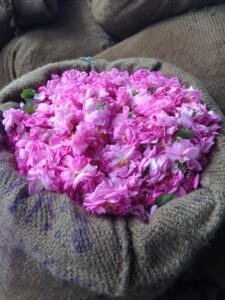
That's right, the essential oils market is primarily dominated by the manufacture of flavourings with orange (South America, Florida) and lemon (Argentina, Italy, Spain). Next in line are essential oils used as ingredients in perfumery, cosmetics and pharmaceuticals (mint lavender, eucalyptus, tea tree). Finally, aromatherapya fast-growing field of application, but which represents only 2%(1) of the world trade in essential oils with original plants from local pharmacopoeias, for example.
Over the last twenty years, the market for essential oils has grown steadily. Having given in to the temptation of synthetic products from the 1930s to the 1960s, the more informed consumer is now turning away from these synthetic products in favour of essential oils. turn to natural, more authentic and healthier solutionsEssential oils meet precisely this need.
Although the market as a whole continues to grow, it remains highly volatile and driven by the upheavals in our society. Essential oil supply chains are complex and are built up over timeAs a result, they can easily be weakened by the vagaries of the weather, economic crises or the disruption of their traditional market by new players...
The term "essential oil" must define a pure and natural product, but it can be estimated that only a small proportion < 10% of the products sold in the world are really essential oils as defined by the AFNOR.(2). And unfortunately, there are still too many adulterated products in circulation by the deliberate or accidental addition of substances of lesser value (synthetic or natural) or contaminants(3).
At HERBAROM, our priority is to guarantee the quality of our products, their origin and their naturalness while maintaining the most strategic supply chains to avoid market fluctuations and meet our customers' needs throughout the year:
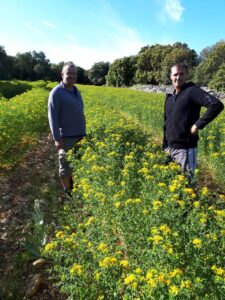
In order to offer you an even wider range of essential oils and original species, we commit to suppliers with whom we have long-term relationships. We ensure the quality of these essential oils by mapping the risks associated with each growing region and then analysing products presenting a high risk of adulteration. (chiral chromatography, carbon-14 analyses). GCMS analysis and analysis of certain contaminants (example pesticides) is carried out on each batch.
We work in close collaboration with our producers and we put all our expertise and know-how at their disposal. We help them to start planting and then follow them in the field to check good farming practices. Once the crop has been harvested, we analyse the quality of their batches and talk to them in order to optimise yields and make the most of their raw materials. It is extracted by steam distillation, a gentle method that uses no solvents, enabling us to return organic waste to farmers for composting on their farms.
Every day, HERBAROM strives to develop responsible behaviour towards economic players, the environment and society. As a signatory of the Global Compact France, our entire team is committed to respecting these guiding principles and acting at its own level for a sustainable world. In December 2022, HERBAROM has been awarded the "Silver" recognition level by the independent body ECOVADIS.
We give preference to organically grown plants and gentle extraction techniques, we forge lasting and loyal links with all our partners, we support the local economy and we are very vigilant when it comes to managing pollutants.

 EN
EN  FR
FR