
Essential oils are very popular with the general public, and have found their place among consumers: to purify our homes, ward off pests, promote well-being or relieve certain ailments, they are now part of our daily lives...
But what about their use in our cosmetics?
Of natural plant origin, essential oils have become precious substances that cosmetics cannot do without. As an active ingredient or simply as a fragrance, they can be found in soaps, creams, lotions and gels, much to the delight of consumers who are constantly on the lookout for authenticity and naturalness.
In this article, we show you how essential oils can be incorporated into your cosmetic formulations...
Want to find out more? Download the guide to essential oils in cosmetics!
Incorporating essential oils into your cosmetics means responding precisely to the needs of the moment by offering the buyer a pleasurable experience and care synonymous with quality. As aperfuming agentThey are used to replace synthetic molecules and increase the percentage of natural products in the final formula.
Beyond their organoleptic interest, they can also add a certain activity to products. They are used as active ingredients, particularly antibacterial ingredients in deodorants, or for their effects on the skin.(1) : purifying (2) (3) (4)soothing (5)and even decongestant, firming and antioxidant properties (6) etc.
Some do not deteriorate and can be kept for up to 3-5 years, but their stability depends mainly on the conditions in which they are kept: light, heat, etc.
The formulation of cosmetic preparations based on essential oils requires a number of factors to be taken into account:
All cosmetic products sold in the European Union must comply with the This rule does not apply to essential oils. Even though they are natural products, they are not without danger to health if they are not used correctly.
European regulations(7) and recommendations for use, via IFRA(8) make it possible to offer safe cosmetic products. These recommendations for use are based on scientific data produced by expertsThey are widely followed by the cosmetics industry.
To comply with the European regulation, marketers must consider all technical, regulatory, toxicological and bibliographical data to assess the safety of its cosmetic formula.
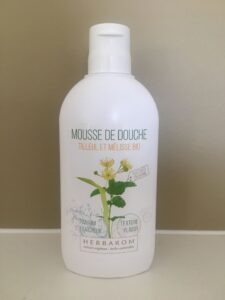
For illustrate the development of a cosmetic with essential oilsWhat could be more convincing than a concrete example? Here's a step-by-step guide to making our scented shower foam with essential oils.
The aim of the project was to design a product that was innovative, balanced, natural and pleasant to use.
The first step was to create a fragrance blend using essential oils of lemon, sweet orange and rosemary. Once this mixture had been developed, the percentage to be added to the rest of the formula had to be determined.
And yet, There are several rules to follow when formulating essential oil-based preparations :
The results are more than conclusive The result is a natural, balanced shower foam scented with a blend of essential oils, an authentic well-being product...
Of natural origin, Essential oils have become essential raw materials in cosmetics. However, the quality of your formula will depend above all on the purity of your raw materials, so to be sure of this, you need to be particularly vigilant about the sourcing and supply chain of these exceptional ingredients...



 EN
EN  FR
FR